 Exploring the Wild Life Class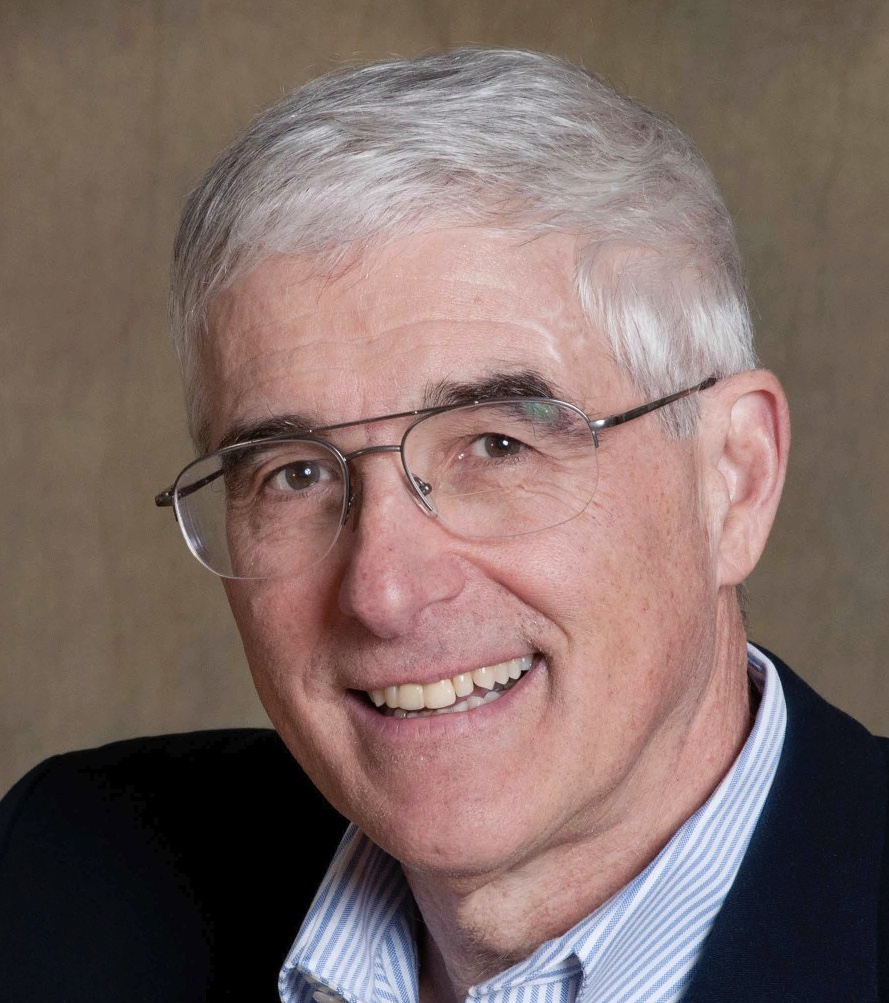
Greg
Class Essay: How Princeton Affected My Life – And Yours
By Greg Conderacci
“Did you ever think of running track for Princeton?” asked the stranger’s voice on the other end of the phone.
Not in my wildest dreams, I thought.
"Would you like to visit the school? I’m heading down for a football weekend soon. Would you like to join me?” the alumnus track scout offered.
This year, I celebrate the 61st anniversary of that 10-minute conversation, which happened in my junior year of high school. It was my first Princeton Inflection Point. In retrospect, this PIP was a far more important event than graduating 55 years ago. It was a crossroads, a first step on a new path that I hadn’t known existed. I unaware of it then, but I’d won the lottery without buying a ticket.
For the next six decades, I (and you) benefited from scores – perhaps hundreds – of these PIPs. We certainly weren’t even aware of most of them. Opportunities that appeared out of nowhere. Doors that opened. Grad school admissions. Promotions that happened sooner than expected. An extra level of resume credibility. Access to certain social circles. People who knew people who knew you. The “Old School Tie.”
I recently emailed a randomly selected sample of our class about “turning points.” Some clearly were life-changing:
- “During sophomore year, I felt aimless,” said Tom Sinclair, who became a physician. “I was wasting my time without any clear direction. I chose to take a leave of absence and enroll in the Peace Corps.” Tom went to Ecuador, where he helped campesinos claim land in the Amazon Basin. What started as a clearing in the rainforest is now a city of 6,000 people, Tom said.
- “At our Freshman Prom in May 1968 (remember the Wicked Wilson Pickett in the old Armory?) I met Fern Litman, the Wellesley girl to whom I have been married these past 52 years,” said Mark Mazo, a lawyer.
- “The academic rigor required at Princeton taught me the skills that made medical school so much easier,” said Edwin Leary. “I believe it was Dr. Alyea who made the point that opportunity favors the prepared mind and that all facets of a liberal education will come into play.”
- “I joined one of the major money center banks in New York City,” said an alum who asked to remain nameless. “I was welcomed and mentored by a number of Princetonians, several of whom were in positions of senior management at that financial institution. Their advice served me well for over 40 years in banking.”
- “Senior year, I was not sure of what to do with the rest of my life, but I was ready to take the business boards,” said Albert A. Barbieri Jr. “Learned that all of my roommates (five total) were taking the law boards. I had never given law school a thought, but it seemed like the thing to do, so I signed up. Fifty-four years later, I am still sitting at my desk creating and reviewing legal documents.”
- “I learned or read, somehow, that women were going to law school,” said Carla Wilson, another attorney. “I knew I couldn’t go to medical school, no science or math. I didn’t want to get a Ph.D., and the most I knew was that it was hard to get a professorship. So, I went to law school, which I found out was exactly right for me.”
To be sure, not every inflection in life is Orange and Black. Yet perhaps it pays to think a bit about this vast treasury of PIPs that have had an unimagined impact on our lives. Probe those PIPs a bit and you’re likely to turn up insights you hadn’t considered before.
For example, I got that 1965 phone call because I had finished second in a big cross-country race. On the call, I asked the scout about the guy who won.
“He’s not capable of doing the academic work at Princeton,” he replied. But that runner was far better than me. He won a race at the prestigious Penn Relays. He is also Black. He did not get a PIP. I like to think that today he would have.
“I went to my philosophy precept, and the white male, late 20s preceptor cut me off when I tried to say something,” said Carla of another Princeton “turning point.” “He cut me off and wouldn’t let me speak. That made me decide to ignore Princeton and not go to class, any class. I actually wasn’t deeply hurt or offended, I just kind of subliminally concluded that I wasn’t wanted and no point getting ignored and shut out again.”
Often, little PIPs lead to bigger ones. For example, hampered by arthritis, I dropped out of track midway through freshman year and joined The Daily Princetonian. It was an undergraduate PIP that would lead to a reporting job at The Wall Street Journal, a postgraduate PIP.
- My turning point came in senior year, a tough time for me, adrift and uncertain,” wrote Raphael Sonenshein, a scholar and professor of political science. “My brother told me about Paul Ylvisaker, who had become a professor at the public affairs school. I wandered into his office. We chatted and he asked if I would mind driving him to Newark where he had a meeting planned with the new African American mayor, Kenneth Gibson. Of course, I said, ‘Sure.’ That was the beginning of months of work with Paul helping the mayor, and that led to my senior thesis on Gibson. And from there, my interest grew in the historic role of Black mayors, which led me to graduate school and to my book on Mayor Tom Bradley of Los Angeles. It was a lucky, life-changing thing to have met him, and he was always there at turning points to come.”
- Jeff Hosterman wrote about discovering the calming impact of organ music that remains with him today. “It was a dark afternoon, and I was trudging my way back to my dorm after a long day and a couple of difficult classes. It had started to rain, and I happened to see a beautiful stream of light coming from an open side door of the University Chapel. Needing shelter from the storm, I headed for the door, hoping the rain would lessen. The organist was playing the renowned organ as I slipped quietly into a pew. I knew nothing of musical scores or the grandeur of the Chapel. Totally captivated and calmed, I stayed for 45 minutes as the organist finished his practice. The rain had stopped, and walking back, I felt like a burden had been lifted from my shoulders.”
****
What were some of your PIPs? How did they affect your life?
To help with that question, here’s my not-particularly-profound PIP Primer, which might be fun to play with at our 55th Reunion – and beyond:
- What’s a PIP? A PIP is a Princeton Inflection Point. It’s a turning point, caused directly or indirectly by a relationship to Princeton, when your life changed direction. Sometimes, seemingly tiny PIPs can have an enormous impact. And, of course, seemingly big ones can lead nowhere.
- Are PIPs good or bad? They can be either, neither, or both. Sometimes they seem one way and end up the other way. Both of my daughters applied to Princeton. One got in; the other didn’t. They were both better for it.
- How can I tell if it’s a PIP? Sometimes this is easy; often not. The nice thing about more than half a century of retrospection is that we can all identify some of them pretty clearly.
- So, it’s a PIP. So what? Well, like it or not, our inflection points shape us. The experiences we’ve had. The decisions we’ve made. The successes, the failures, the mistakes, the good and bad luck, the opportunities seized or ignored, etc. For many (maybe all) of us, Princeton has played a significant role in them.
- How far back should I look for PIPs? Inflection points can go way back, like those funhouse mirrors that face each other and reflect to infinity. I wouldn’t be writing this if my grandfather hadn’t first stepped on American soil in 1904.
- How can I use PIPs? They can give meaning to your life. Ask yourself: What exactly was the PIP? What led up to it? Anxiety or frustration? Love or lust? Urgency or curiosity? Did you embrace it or fight it? What did you learn from it? Did you grow from it? How did it affect your values and beliefs? How much did it change? How much did it impact others?
- What’s the most important takeaway from all this PIP stuff? Gratitude. Einstein said, "There are only two ways to live your life. One is as though nothing is a miracle. The other is as though everything is a miracle.” I’m definitely on the miracle side for all PIPs and thankful for them. How about you?
- Hey, wait! Isn’t the 55th reunion a potential PIP? Let’s find out. What better place to add to your list than the best old place of all?
It’s not too late to share your PIPs as those who responded to the survey have done. Email them to us at yearbook@princeton71.com and we’ll add them to this story on the online 55th-Reunion Yearbook.
Many of you may have had a PIP experience similar to this one Jay Sollis shared:
“Throughout my career, my Princeton pedigree seemed to cut both ways. People were either overly impressed or immediately turned off. I never wore it on my sleeve.” One day, as he was checking into a barracks as a young Marine officer, the company executive officer asked,
“And, so, where did you go to college, Lieutenant?”
“I went to school in New Jersey,” I said, wanting to avoid the inordinate reaction I had come to expect at the mere mention of Princeton.
“Rutgers?”
“No, sir.”
“OK. Are you going to make me guess?”
“Ah, no, sir. I graduated from Princeton in ‘71.”
“Ah, Princeton. Yes, I’ve heard of it. Quite a fine school, I understand. Tell me, does Princeton have a football team?”
“Yes, sir.”
“I see. Did you go to football games when you were at Princeton?”
“Yes, sir, I sure did.”
“I see … So, let me see … does Princeton play Yale in football?”
“Yes, sir. Princeton-Yale is our answer to Army-Navy.”
“I see. Tell me, Lieutenant, have you ever seen Princeton beat Yale in football?”
“No, sir. We lost four straight when I was there.”
Later, Jay discovered his captain had played for Yale.